Key Points
|
Choosing a roofing material for a new build or a full roof replacement is one of the bigger decisions in any renovation, and the debate between Colorbond and tiles comes up in almost every conversation about reroofing in Melbourne.
In this blog, we will understand which roofing material, Colorbond or tiles, suits different homes, how the two compare on weight, maintenance and storm performance, how they compare on sound and insulation, and how their cost and lifespan stack up against each other.
At Modern Seal Roofing, we install, repair and restore both Colorbond roofing and tile roofs across Melbourne, which puts us in a good position to compare how each material actually performs once it has been on a roof for a few years rather than just on paper.
Colorbond or Tiles: Which Roofing Material Is Best?
Colorbond or tiles: Which is best depends more on a home's specific needs than any single, universal answer. Colorbond steel is lightweight, low maintenance and performs well in severe weather, while tiles, whether concrete or terracotta, offer stronger acoustic soundproofing and greater thermal mass, which some homeowners prefer for temperature regulation.
Neither material is universally better, and the right choice usually comes down to priorities such as budget, the age and structure of the home, and how much ongoing maintenance a homeowner is willing to take on.
It is also worth considering the surrounding streetscape and any corporate or planning requirements, since some areas or developments have preferences around roofing appearance that can influence which material is practical for a specific property.
Comparing Weight, Maintenance and Storm Performance
Colorbond is significantly lighter than tile roofing, which reduces the load on a home's structure and can make it a practical option for renovations where the existing frame was not built for a heavier tiled roof. It also tends to handle severe storms and high winds well, since sheets are fixed as continuous panels rather than individual pieces.
Tiles, by comparison, require more ongoing maintenance, since individual tiles can crack or shift over time and need replacing, whereas a well installed Colorbond roof generally needs less frequent attention beyond routine cleaning and inspection.
Comparing Sound, Insulation and Appearance
Tiles generally outperform Colorbond on acoustic soundproofing and thermal mass, meaning a tiled roof can feel quieter during rain and hold temperature more evenly than a metal roof without additional insulation. This is one of the main reasons some homeowners choose tiles despite the higher maintenance requirement.
Colorbond, on the other hand, offers a sleeker, more contemporary appearance and comes in a wide range of colours, which suits modern architectural styles that tiles do not always complement as well.
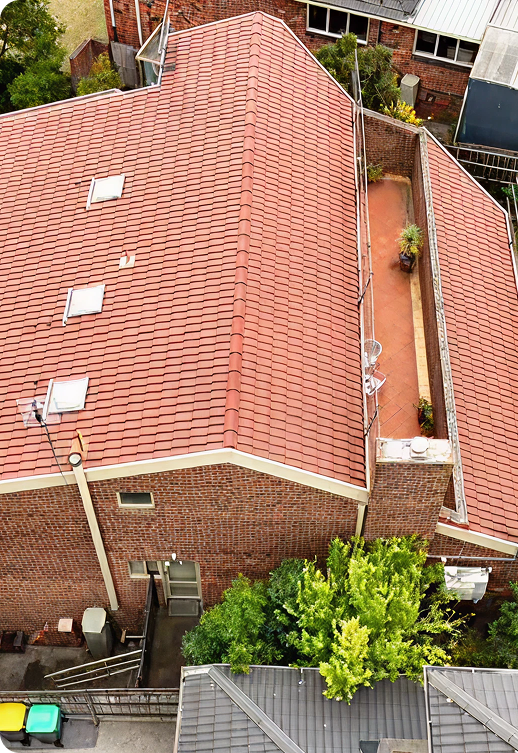
Tiles, particularly terracotta, tend to suit period and heritage style homes better, since their texture and colour range align more naturally with traditional Melbourne architecture than a flat metal sheet finish.
Comparing Cost and Lifespan
Upfront cost varies depending on the specific product chosen within each category, though Colorbond is often competitive with, or in some cases lower than, a full tile installation once labour and structural requirements are factored in. Both materials can last several decades when properly installed and maintained.
Lifespan comes down largely to maintenance rather than material alone. A tile roof that is restored and resealed at the right intervals can last as long as a well maintained Colorbond roof, so ongoing care matters as much as the initial material choice.
Why Choose Modern Seal Roofing
Modern Seal Roofing installs, repairs and restores both Colorbond and tile roofs across Melbourne's South Eastern and Eastern suburbs, including Brighton, Vermont South, Surrey Hills, Wheelers Hill, Mordialloc and Clayton South, so the recommendation given for a specific home is based on what actually works in that area rather than a one size fits all answer.
Every job, whether it involves a new Colorbond installation or a full tile roof restoration, is completed by our own licensed and insured team and backed by a 10 year written workmanship guarantee.
Conclusion
There is no single correct answer to Colorbond versus tiles, since the two materials suit different priorities around weight, maintenance, sound and cost. Comparing how each performs on a specific home, rather than relying on a generic comparison, is the most reliable way to decide. For tailored advice on Colorbond roofing or tile roof restoration anywhere across Melbourne's South Eastern and Eastern suburbs, call Modern Seal Roofing on 0413 464 666.