Deciding between restoring a tile roof or a Colorbond roof comes up often once a roof starts showing its age, and the right approach depends heavily on which material is already on the house. Roof restoration in Melbourne usually falls into one of these two quite different processes, even though both aim for the same end result.
In this blog, we will understand which restoration option suits your roof, tile or Colorbond, how tile roof restoration actually works, how Colorbond roof restoration differs, and how the two compare on cost and long term value.
Modern Seal Roofing carries out roof restoration on both tile and Colorbond roofs across Melbourne, so the process recommended for a specific home is based on the material already in place rather than a single standard approach applied to everything.
Tile Roof or Colorbond: Which Restoration Option Is Right for Your Home?
The right restoration option depends entirely on the existing roofing material, since tile and Colorbond roofs are restored using different processes. A tile roof is restored through cleaning, tile replacement, repointing and coating, while a Colorbond roof is restored through cleaning, rust treatment where needed, and repainting or recoating the sheeting.
Neither process converts one material into the other, so restoration always works with what is already on the roof. Converting from tile to Colorbond, or the reverse, is a separate, more significant project than a standard restoration.
An inspection is the practical starting point either way, since it confirms both the current roofing material and its condition, which together determine whether restoration is realistic or whether a more significant project should be considered instead.
How Tile Roof Restoration Works
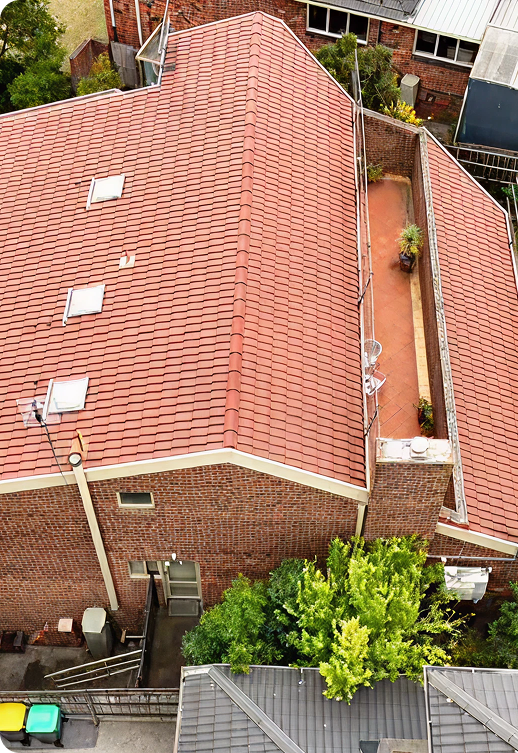
Tile roof restoration starts with a full high pressure clean to remove moss, algae and grime, followed by replacing any cracked or broken tiles and repointing or re-bedding the ridge capping. A protective coating is then applied across the full roof to seal and refresh its appearance.
This process works well provided the tiles themselves remain structurally sound, since restoration relies on the existing tiles rather than replacing them. A roof with widespread cracking or porosity beyond what cleaning and coating can address usually needs a different conversation about full replacement.
Colour options for the final coating are also worth discussing at quote stage, since a tile restoration is a practical opportunity to update a roof's appearance at the same time as protecting it, rather than simply matching the original faded colour.
How Colorbond Roof Restoration Works
Colorbond roof restoration typically involves a thorough clean, treatment of any surface rust or corrosion, resealing of screw fixings and joins, and a fresh protective coating designed for metal roofing. Because Colorbond sheets are continuous panels rather than individual pieces, there is no equivalent to tile replacement in this process.
Finding corrosion early is one of the more important parts of Colorbond restoration, since untreated rust can spread faster on metal than an equivalent issue would on tile, which is why identifying early signs of rust during a routine inspection matters more with this material.
Comparing Cost and Longevity of Each Restoration Option
Cost for both restoration types depends on the size and pitch of the roof and the extent of repair work required before coating, so a direct dollar comparison between tile and Colorbond restoration is not particularly meaningful without an inspection of the specific roof. Generally, tile restoration involves more labour due to individual tile handling, while Colorbond restoration is often faster per square metre.
Longevity for both options depends heavily on maintenance after restoration. A well maintained restored roof of either material, cleaned periodically and inspected annually, can perform well for a decade or more before needing attention again.
Why Choose Modern Seal Roofing
Modern Seal Roofing restores both tile and Colorbond roofs across Melbourne's South Eastern and Eastern suburbs, including Brighton, Vermont South, Surrey Hills, Wheelers Hill, Mordialloc and Clayton South, giving us direct experience with how each material performs in these specific areas.
Every restoration, whether tile or Colorbond, is completed by our own licensed and insured team and backed by a 10 year written workmanship guarantee, so homeowners get the same standard of accountability regardless of roofing material.
Conclusion
Tile and Colorbond roof restoration are genuinely different processes, and understanding which one applies to a specific roof is the first step before requesting a quote. Comparing cost and longevity only makes sense once that distinction is clear. For a restoration quote tailored to a tile or Colorbond roof anywhere across Melbourne's South Eastern and Eastern suburbs, call Modern Seal Roofing on 0413 464 666.