Key Points
|
Melbourne's weather doesn't play by the rules. One morning, it's 32 degrees, and by afternoon, you're watching hail bounce off the driveway. If you've ever had a roof leak mid-summer or noticed your tiles cracking after a cold snap, you already know that the material sitting above your head matters more than most people realise.
Choosing the right roofing material isn't just about looks. It determines how well your home holds up over the next 20, 30, or even 50 years. It affects your energy bills, your roof repair costs, and what you'll spend if things go wrong.
At Modern Seal Roofing, we've spent over 25 years working on Melbourne roofs in every suburb and in every condition imaginable. We've seen what lasts and what fails, and we've completed roof restoration in Melbourne across tens of thousands of housing properties, from beachside suburbs in the south to the foothills in the east.
We've seen what lasts and what fails, and we've restored tens of thousands of homes across the city. Get a Free Roof Inspection Today
This guide breaks down the top three types of roofing materials used across Melbourne homes in 2026 , what they're made of, why they work, how long they last, and what happens when they need attention.
What Are the Most Popular Types of Roofing Materials in Melbourne?
Ask any experienced roofing contractor in Melbourne, and the answer is consistent: the vast majority of Melbourne homes run on one of three materials, Colorbond steel, terracotta tiles, or concrete tiles. Each has earned its place for a reason, and each suits a different type of home, budget, and priority.
Material | Lifespan | Best For | Roof Replacement Cost (approx.) |
Colorbond Steel | 40+ years | Modern homes, low maintenance | $12,000 – $25,000(approx.) |
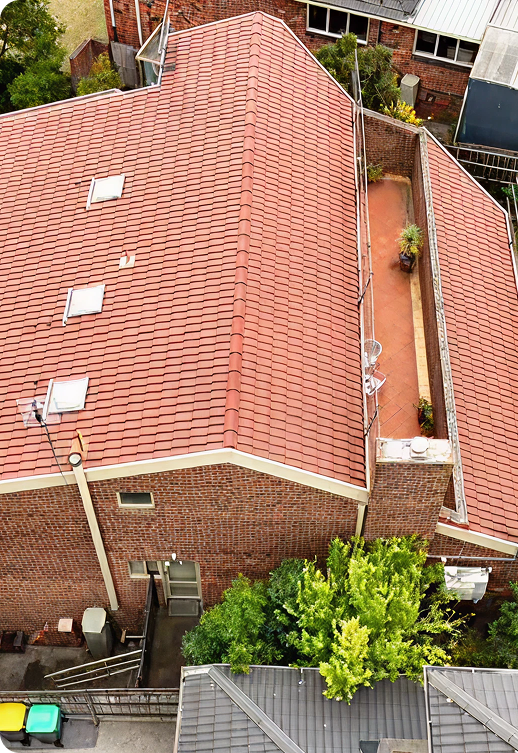
Terracotta Tiles | 50–100 years | Heritage, premium homes | $18,000 – $35,000+(approx.) |
Concrete Tiles | 40–50 years | Suburban homes, budget-conscious | $15,000 – $22,000(approx.) |
These are whole-of-roof replacement figures. For most structurally sound roofs, a professional restoration costs a fraction of that, and adds 10 to 15 years of life.
Colorbond Steel - Melbourne's Most Versatile Metal Roof
If you drive through any Melbourne suburb built in the last 20 years, Colorbond dominates the skyline. There's a reason for that. It's an Australian product designed specifically for Australian conditions, and Melbourne's climate, with its UV intensity, wind exposure, and heavy rain events, is exactly what it was built for.
What is Colorbond?
Colorbond is a pre-painted steel product manufactured by BlueScope Steel. It's used for metal roofs, wall cladding, guttering, and fascia across residential and commercial roofing applications throughout Australia. The name refers to the bonded colour coating, a system engineered to resist peeling, chipping, and fading under prolonged UV exposure.
Why Colorbond Works in Melbourne
Here is why :
Weather resistance is built in. Colorbond steel handles heavy rainfall, coastal salt air, and Melbourne's unpredictable hail events without corroding or cracking. Its corrosion-resistant substrate is paired with a UV-stable topcoat designed to perform across decades, not just years.
Lightweight on your structure. Concrete and terracotta tiles are heavy. A tile roof can weigh 40 to 60 kilograms per square metre. Colorbond weighs roughly 5 kilograms per square metre. That difference reduces load on your home's frame, simplifies installation, and can make roof replacement faster and less expensive.
Energy efficiency. Colorbond's Thermatech technology reflects solar heat rather than absorbing it. On a 35-degree Melbourne summer day, that's the difference between a liveable house and an oven. Reduced heat absorption means less work for your cooling system and lower energy bills across summer.
Low maintenance between visits. Unlike tile roofs, there's no mortar to repoint, no cracked tiles to replace, no grout to clean. A Colorbond roof in good condition needs periodic inspection and an occasional professional clean, not the ongoing attention tile roofs require.
Design flexibility. Colorbond comes in over 20 standard colours and multiple profiles, corrugated, trimdek, kliplok, and custom panel options. Whether the home is a 1970s brick veneer or a brand-new contemporary build, there's a profile and colour that suits it.
Colorbond Roof Lifespan and Restoration
A well-installed Colorbond roof lasts 40 years or more. Over time, UV exposure can dull the coating and surface oxidation can develop, particularly on older installations or in coastal areas. When this happens, professional Colorbond roof restoration, including degreasing, rust treatment, bonding primer, and a quality recoat, extends the roof's life significantly without the cost of a full house roof replacement.
Metal roof repairs on Colorbond are also generally straightforward. Damaged panels can be replaced individually rather than requiring whole-roof remediation, which keeps roof repair costs manageable.
Terracotta Tiles - Melbourne's Premium Long-Term Roof
Walk through Carlton, Fitzroy, Hawthorn, or any of Melbourne's heritage suburbs and you'll see terracotta everywhere. It's been used on Melbourne roofs for over a century, and the tiles on many of those heritage homes are still performing. That's not a coincidence.
What is terracotta?
Terracotta roof tiles are made from natural clay, shaped and fired at high temperatures. The firing process hardens the clay and bakes in the colour , which is why a quality terracotta roof doesn't fade the way painted surfaces do. The earthy red tones are a product of the clay's mineral composition, not an applied coating.
Why Terracotta Works in Melbourne
Here are some of the reasons to consider while choosing the terracotta roof tile:
It genuinely lasts. Terracotta tiles carry manufacturer warranties of 50 years, and many Melbourne homes have original terracotta installations that are 80 to 100 years old and still sound. If you're choosing the best roofing material based purely on longevity, terracotta wins by a wide margin
Thermal mass is a real benefit. Clay has high thermal mass; it absorbs heat slowly during the day and releases it gradually as temperatures drop at night. In Melbourne's climate, where nights can turn cool even after hot days, this natural regulation genuinely reduces reliance on artificial heating and cooling.
Colour stays. Because the colour is baked in rather than applied, terracotta doesn't chalk, fade, or require repainting at the same intervals as concrete. The look you see on a 10-year-old terracotta roof is largely the same as year one.
Moisture resistance. Fired clay naturally repels water and resists mould. During Melbourne's wet winter months , June through August , when rainfall and sustained moisture can cause problems for surface-treated materials, terracotta's natural composition holds up without intervention.
Heritage and value. In Melbourne's established inner and middle suburbs, a terracotta roof is an asset. It signals quality and period-appropriate restoration, which buyers recognise and value at inspection.
Terracotta Roof Lifespan, Repairs, and Restoration
Terracotta tiles themselves rarely fail; what fails is the ridge capping mortar that holds everything together, and the pointing around ridge ends and hip junctions. When mortar cracks or crumbles, water entry follows.
Roof repairs in Melbourne specialists will often find that a terracotta roof in apparent good condition has compromised mortar at the ridges , a targeted repair that costs far less than a full roof replacement. Regular inspection every five to seven years catches this before it becomes a structural issue.
Full roof restoration on terracotta involves cleaning, repointing all ridge caps, replacing any cracked tiles, applying a specialist sealer, and recoating with a membrane system designed for porous clay surfaces. This is specialist work; terracotta restoration done incorrectly fails quickly. It requires experienced roofing contractors in Melbourne who understand the material.
3. Concrete Tiles - Melbourne's Most Common Suburban Roof
Drive through Doncaster, Ringwood, Frankston, or Dandenong, and almost every roof from the 1960s through to the 2000s is concrete tile. It became the default roofing choice for Melbourne's suburban expansion because it offered genuine durability at a price that made new homes financially viable for ordinary families. That reputation holds today.
What are concrete roof tiles?
Concrete tiles are manufactured from a mixture of sand, cement, and water, pressed under high pressure and cured. The colour is applied during the manufacturing process using oxide pigments , either through the full mix or as a surface slurry. Over time, UV exposure degrades the surface colour layer, which is why older concrete roofs fade and why repainting is a routine maintenance requirement.
Why Concrete Tiles Work in Melbourne
Here some of the reasons why it works:
Structural strength. Concrete tiles are dense and heavy. That weight, while adding load to the frame, also anchors the roof against wind uplift, a real consideration in Melbourne's gusty southern fronts. A properly installed concrete tile roof handles strong winds without movement.
Cost-effectiveness. Compared to terracotta, concrete tiles cost significantly less per square metre to supply and install. For homeowners balancing home roof replacement cost against budget, concrete is the practical choice that doesn't sacrifice performance.
Versatility of style. Concrete tiles can be manufactured to mimic the profile of terracotta, slate, or flat modern tiles. This gives homeowners aesthetic options without the premium cost of natural materials. It's one of the most adaptable modern roof materials available at the mid-range price point.
Restoration-friendly. Concrete tiles respond exceptionally well to professional roof restoration. Because the surface coat fades rather than the tile itself degrading, a full clean, repoint, prime, and recoat job genuinely returns a faded concrete roof to near-original appearance and performance. This is why roof restoration , rather than full roof replacement , is the practical choice for most concrete tile roofs in Melbourne.
Thermal comfort. Like terracotta, concrete tiles offer thermal mass benefits. The weight and density that make them heavy to handle also makes them effective at moderating indoor temperatures through Melbourne's seasonal shifts.
Concrete Tile Roof Lifespan, Repairs, and Restoration
Concrete tiles last 40 to 50 years. The tile itself rarely needs replacing, surface erosion is the common issue, along with cracked ridge caps and failed mortar pointing at hips and ridges. Ignored long enough, failed mortar leads to water entry, which escalates from a roof repair to a structural remediation job.
Roof shingles replacement cost comparisons often lead Melbourne homeowners to concrete restoration as the more economical path. A professional restoration on a concrete tile roof typically costs $3,500 to $10,000 (approx.) and adds 10 to 15 years. A full roof replacement on the same home runs $15,000 to $22,000 (approx.) or more.
Which Roofing Material Is Right for Your Melbourne Home?
There's no single correct answer , the right material depends on your home's age, structure, location, budget, and what you're trying to achieve. Here's a practical summary:
Choose Colorbond if you want a low-maintenance, modern-looking metal roof with strong weather resistance and a lighter structural load. It suits contemporary homes and is the dominant choice for new builds and full house roof replacements where a clean, long-lasting solution is the priority.
Choose terracotta if you have a heritage or period home in an established suburb and you want the best possible longevity from a natural material. The upfront cost is higher, but a properly maintained terracotta roof can genuinely outlast the building beneath it.
Choose concrete tiles if you have an existing suburban home with a tile roof in reasonable structural condition. In most cases, a professional restoration is the most cost-effective path; it delivers 10 to 15 more years of life for a fraction of the roof replacement cost.
When Does a Roof Need Restoration vs Full Replacement?
This is the question every Melbourne homeowner eventually faces. The answer depends on the structure, not just the surface.
Restoration is the right call when:
The tiles or panels are structurally intact, but the surface is faded, cracked, or coated in moss
Ridge cap mortar is failing, but the tiles themselves are sound
The roof is 15 to 30 years old and hasn't been maintained
You want to maximise the value of the existing structure before selling
Replacement becomes necessary when:
Tiles are crumbling, porous beyond repair, or have suffered structural impact damage
The roof decking or battens underneath have water damage or rot
The roof is 50+ years old and has had no maintenance history
A building inspection identifies structural failure beneath the surface
A professional inspection gives you a straight answer, and it costs nothing with Modern Seal Roofing.
Signs Your Roof Needs Attention Regardless of Material
Whether your home has a metal roof, terracotta, or concrete tiles, watch for these warning signs:
Visible moss, lichen, or dark streaking moisture is being retained and breaking down the surface
Cracked or crumbling ridge cap mortar water entry is a matter of when, not if
Faded, patchy, or chalking colour the protective coating has broken down
Rising energy bills in summer, the roof's reflective properties have deteriorated
Water stains on ceilings or walls active water entry is already occurring
Loose or displaced tiles after storms wind damage have compromised the installation
Two or more of these together are the signal to stop waiting and get an inspection done.
Why Melbourne Homeowners Choose Modern Seal Roofing
When you're making decisions about one of the biggest assets you own, the company doing the work matters as much as the materials they use.
With more than 25 years of experience and over 20,000 completed roofing projects across Melbourne, our team has restored roofs of every material type and condition. Every project is completed by our in-house crew with no subcontractors, ensuring consistent quality from inspection to completion.
As an HIA member, we follow recognised industry standards and use a premium four-coat UV-resistant membrane system for long-lasting protection. Every restoration is backed by a written 10-year workmanship guarantee, a free 12-month return inspection, fixed pricing with no hidden costs, and a free roof inspection to determine whether restoration, repairs, or replacement is the most suitable option.
Call us on 0413 464 666 to book your free inspection or request a fixed-price quote.
Conclusion
Melbourne's climate demands more from a roof than most cities in Australia. The types of roofing materials that work here , Colorbond steel, terracotta tiles, and concrete tiles, have earned their place through decades of real-world performance, not just marketing. Each suits a different type of home and a different set of priorities, but all three share one thing in common: they perform best when they're maintained.
For the majority of Melbourne homeowners, a professional restoration on a structurally sound roof is significantly more cost-effective than full roof replacement. The gap between a $5,000 (approx.) restoration and a $20,000 (approx.) replacement is real , and a thorough inspection from experienced roofing contractors in Melbourne will tell you honestly which one your roof actually needs.
Getting ahead of roof deterioration is always cheaper than reacting to it. Whether your roof is showing its age, coming up for sale, or simply due for maintenance, don't leave it longer than necessary.
Call Modern Seal Roofing on 0413 464 666 for a free inspection and fixed-price quote, or Book Your Free Roof Inspection Online Today.