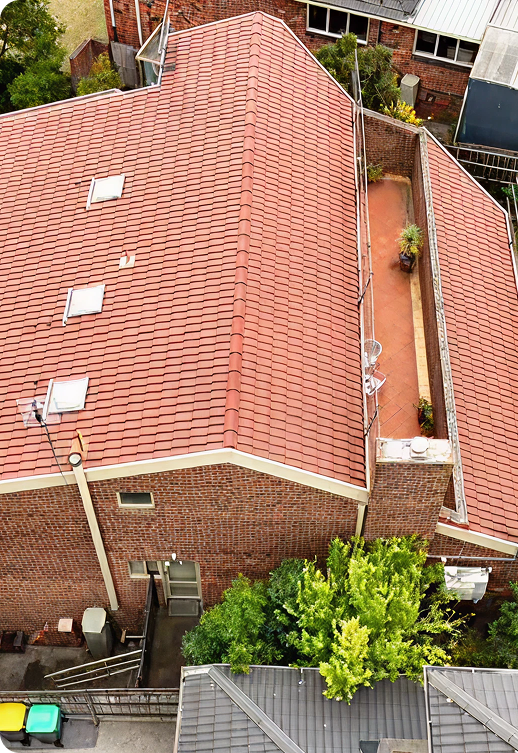
Older Melbourne homes are built to last, but the roofs above them are only as good as the last time they were properly maintained. What looks like a straightforward job from the ground often reveals crumbling mortar, failed coatings, and water pathways that have been quietly doing damage for years.
When professional roof restoration in Melbourne is done correctly, it extends roof life by 15 to 25 years, improves thermal performance, and protects everything below from water damage. When roof repair in Melbourne is rushed or cut short, it creates problems significantly more expensive to fix than the original deterioration would have been. The difference almost always comes down to the same set of avoidable mistakes.
Modern Seal Roofing has been restoring residential roofs across Melbourne's south-east and eastern suburbs for over 25 years. This guide covers the most common mistakes that turn a sound investment into a costly problem and what homeowners should look for before signing with any roofing contractor in Melbourne.
What Makes a Roof Restoration Go Wrong in the First Place?
Most restoration failures trace back to one of three root causes: inadequate surface preparation before coating, incorrect product selection for the roof type or climate, and cutting scope to reduce the quoted price.
Melbourne roofing presents specific challenges that make shortcuts more damaging here than in most Australian cities. Temperature extremes stress coatings and mortar systems harder than in more forgiving climates. High UV exposure breaks down surface protection faster. Heavy seasonal rainfall exploits every unsealed gap. A restoration that does not account for these conditions from the first stage will not last, regardless of how well the final coat looks on completion day.
Understanding where mistakes happen makes it far easier to assess quotes, ask the right questions, and identify the roofing contractors in Melbourne whose approach will deliver a result that holds.
What Most Common Roofing Mistakes That Cost Melbourne Homeowners More?
Every mistake below follows the same pattern. A shortcut is taken to reduce cost or time on the job. The problem is hidden beneath fresh coating or mortar. Melbourne's weather finds it within one to two seasons. The roof repair in Melbourne that follows costs significantly more than doing the job correctly from the start.
1. Skipping or Rushing Surface Preparation
Poor surface preparation is the single most common cause of restoration failure in Melbourne. A coating system is only as good as the surface it bonds to. If moss, lichen, and biological contamination have not been fully removed down to the substrate, coatings will not adhere correctly and will begin to peel, blister, or delaminate within months. Roofing contractors in Melbourne who quote fast turnaround times almost always achieve those numbers by shortening the cleaning and drying phase. A roof that has not been given adequate drying time before primer is applied will trap moisture beneath the coating, creating adhesion failure that shows up in the first winter. Any roof restoration service that cannot explain how long the cleaning and drying phase takes for the specific roof should be questioned before work begins.
2. Ignoring Re-Bedding and Re-Pointing
Applying fresh coating over deteriorated bedding and pointing is one of the most damaging shortcuts in roof restoration in Melbourne. Ridge caps and hip tiles that are not re-bedded and re-pointed will continue to shift, crack, and allow water entry regardless of how many coats of membrane are applied over them. Water tracking under a loose ridge cap bypasses the coating system entirely, resulting in a roof leak repair in Melbourne needed within one to two years of a restoration that looked complete on the day it finished. Re-bedding and re-pointing is not an optional add-on in a quality job. Any quote for tiled roof repairs that does not explicitly include this stage should be treated as an incomplete scope.
3. Using the Wrong Coating Product for Melbourne's Climate
Not all roof coating products perform equally across Melbourne's conditions. A system designed for a more temperate or less UV-exposed environment will degrade faster, losing elasticity and failing to maintain a waterproof membrane through the thermal cycling Melbourne winters and summers deliver. Roof recoating on a residential property requires a product rated for high UV exposure, flexible enough to handle the temperature differential between a summer day above 35°C and a winter morning below 5°C, and correctly specified for the substrate. Operators who use a single product across all roof types regardless of conditions are either unaware of or indifferent to the specification requirements that roofing Melbourne demands.
4. Applying Coatings in the Wrong Weather Conditions
Most modern acrylic coating systems require surface temperatures between 10°C and 35°C and moderate humidity to cure correctly. Applying coating outside this range means the product cures slowly or incompletely, resulting in a soft, under-performing membrane that will not withstand Melbourne's first winter. Pushing coating application through forecast rain to meet a calendar deadline risks a fresh coat being damaged before initial cure, creating blistering and adhesion failure. A quality roof restoration in Melbourne is planned around the daily forecast, not the other way around. Any operator who cannot clearly explain how weather delays are managed during a job is worth scrutinising before committing.
5. Overlooking Roof Leak Detection Before Restoration
Beginning a restoration without first completing thorough roof leak detection in Melbourne leaves existing water pathways unsealed beneath a fresh coating system. A roof inspection that only assesses surface condition will miss active leak pathways through failed flashings, cracked valley iron, and deteriorated roof penetrations around skylights and whirlybirds. Coating over these failure points does not seal them. It conceals them until water damage reappears internally. For older Melbourne homes with any history of water entry, professional leak detection as part of the pre-restoration assessment is not optional. It is the step that ensures the coating system is protecting a dry, intact substrate.
6. Cutting Coats to Reduce the Quoted Price
A 4-coat system, two coats of sealer and two coats of membrane, is the minimum standard for a restoration that will perform through Melbourne's conditions over 15 to 25 years. Reducing this to two or three coats to offer a lower price significantly shortens the serviceable life of the work. Each coat serves a distinct purpose. The primer coat penetrates and seals the tile substrate. The sealer coats create the bonding layer for the membrane. The membrane coats provide the waterproof barrier and UV-protective surface. Removing any stage compromises the entire system. Roof restoration cost quotes significantly below the Melbourne market range almost always reflect a reduction in coat count, preparation time, or both.
7. Neglecting Gutters and Drainage During Restoration.
A restoration that does not address the condition of the roof gutter and drainage system leaves a significant failure point in place. Blocked or damaged gutters cause water to overflow against fascia boards and eaves, creating timber rot and water ingress into the wall cavity, regardless of how well the tile surface has been restored. Roof maintenance that includes gutter inspection, cleaning, and repair as part of the restoration scope ensures the completed job performs as a complete system. A quality operator will assess gutter condition during the pre-restoration roof inspection and include any necessary work in the written scope.
8. Not Getting a Written Scope and Workmanship Guarantee.
Verbal agreements and single-line quotes are among the most common sources of dispute in the Melbourne roofing industry. A homeowner who accepts a quote without a detailed written scope has no documented basis for holding the operator to the standard discussed before the job started. A written scope should specify the cleaning method and drying time, the extent of re-bedding and re-pointing, the number of tiles being replaced, the coating product, the number of coats, and the warranty covering both materials and workmanship. Roof replacement costs in Melbourne are substantially higher than restoration, which means the quality of the restoration directly determines whether full replacement becomes necessary before it should. A 10-year workmanship guarantee from an established operator with a verifiable track record is documented protection that a verbal promise cannot replicate.
What Happens When These Mistakes Are Left Unaddressed?
Every mistake above follows the same escalation pattern. A shortcut taken during restoration is hidden beneath fresh product. Melbourne's weather finds the failure point within one or two seasons. What started as a roof maintenance issue becomes a roof leak repair in Melbourne. Left further, it becomes structural work involving timber replacement, insulation replacement, and ceiling repair.
Roof restoration cost addressed correctly the first time is a fraction of the cumulative cost of repeated repairs on a restoration that was never done properly. The most effective protection against this pattern is a thorough pre-job roof inspection, a detailed written scope, and a roofing contractor in Melbourne with the track record to stand behind the work.
What Roof Services Does Modern Seal Roofing Provide?
Modern Seal Roofing provides a complete range of residential roof services across Melbourne's south-east and eastern suburbs, covering every issue identified in this guide.
Full roof restoration in Melbourne using a proven 4-coat membrane system, covering cleaning, re-bedding, re-pointing, and roof recoating with sealer and membrane formulated for Melbourne's climate. Professional tiled roof repairs, including individual tile replacement, roof fixing at ridge caps and hips, and flashing repair. Roof leak repair in Melbourne and leak detection, including tracing active water pathways and sealing entry points before restoration coating begins. Roof insulation assessment as part of the pre-restoration inspection for older homes where thermal performance is a concern. Gutter inspection, cleaning, and repair as part of every full restoration scope.
Every job begins with a free roof inspection and a written quote detailing the full scope of work with no additions after the quote is accepted.
Why Choose Modern Seal Roofing for Roof Restoration in Melbourne?
Homeowners searching for trusted roof restorers near them across Melbourne's south-east and eastern suburbs consistently choose Modern Seal Roofing for the following reasons.
Honest Advice on Restoration Versus Replacement Modern Seal Roofing recommends roof replacement in Melbourne only when the structural condition requires it. Where tiled roof repairs or a full restoration is the right answer, that is what is recommended.
Conclusion
A roof restoration in Melbourne done correctly, is one of the most cost-effective investments available for an older residential property. Done with shortcuts, poor preparation, skipped re-bedding, reduced coat counts, or no written scope, it creates problems more expensive to resolve than the original deterioration.
The mistakes covered in this guide are not rare edge cases. They are the consistent patterns seen in restoration work that has failed prematurely across Melbourne. Avoiding them comes down to choosing an operator with a documented process, a detailed written scope, and a workmanship guarantee that means something.
Modern Seal Roofing offers free roof inspections for residential properties across Melbourne's south-east and eastern suburbs. The inspection gives a clear picture of what the roof actually needs and what a correctly scoped restoration involves.